Why Every Tooljar Server Is Designed to Be Replaceable
Inside the Architecture, part 2 of 7, is a short series about the engineering choices that make software easier to trust. These are not technical deep dives. They are explanations of what we optimize for and why it matters.
Servers fail.
Disks wear out. Updates go wrong. Hardware disappears. Providers have outages. Configuration drifts. Sometimes a machine simply reaches the end of its useful life.
None of this is unusual. The mistake is designing a system as if the machine itself will always be there.
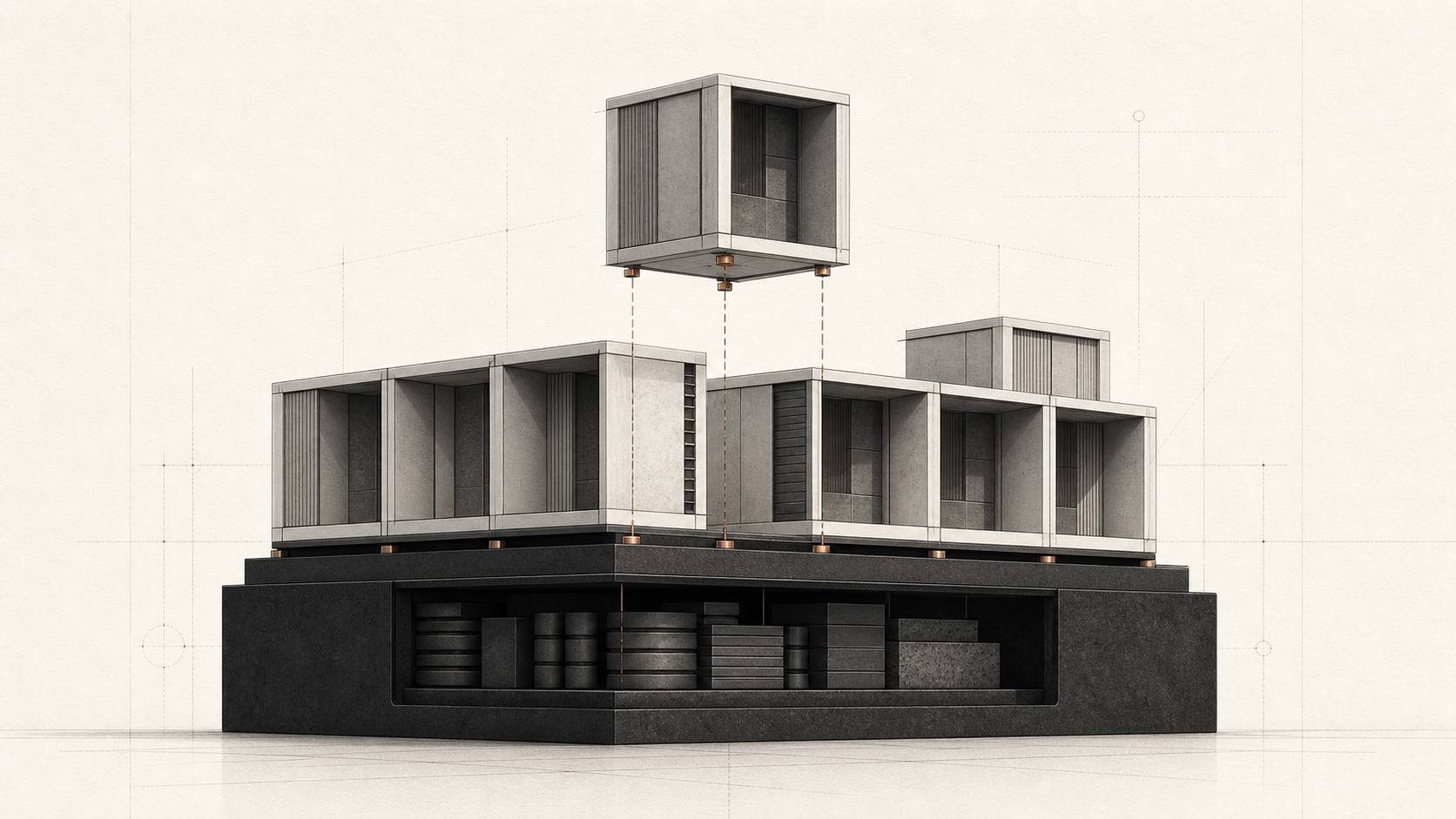
Every Tooljar server is designed around a different assumption: the server should be replaceable.
That does not mean the server is unimportant. It means the identity of the system should not be trapped inside one particular machine.
A Server Is a Place the System Runs
When a server becomes a hand-built artefact, recovery becomes archaeology.
Someone has to remember which packages were installed, which settings were changed, which workaround was added three years ago, and which undocumented step makes everything start correctly. The longer that machine survives, the more irreplaceable it becomes.
That may feel stable right up until the day it fails.
We prefer the important parts of a Tooljar deployment to be defined outside the individual server: what should run, how it should be configured, where durable data belongs, and how the environment can be recreated.
The goal is not to preserve a machine forever. The goal is to preserve the service and the customer’s information when the machine changes.
Replaceability Is an Operating Discipline
A replaceable server turns failure from a rescue mission into a known process.
Instead of asking, “How do we repair this exact machine?” we can ask, “How do we restore the required service on a sound machine?” That is a much healthier question. It creates more options, reduces dependence on fragile local history, and makes planned migrations less dramatic.
Replaceability also forces useful discipline before an incident. Configuration has to be explicit. Persistent information has to be identified. Recovery steps have to be understandable. Hidden assumptions become harder to ignore.
What the Customer Is Really Buying
Customers are not buying a server. They are buying continuity.
They need confidence that a hardware failure, hosting change, or operating-system problem does not turn their software into an irreplaceable black box.
Designing servers to be replaced is how we keep the machine from becoming the product.
Previous: ← Why Deployment Should Be Boring
Next: Why We Separate Operating Systems From Customer Data →