
I No Longer Think Python Is the Most Important Programming Language I Know
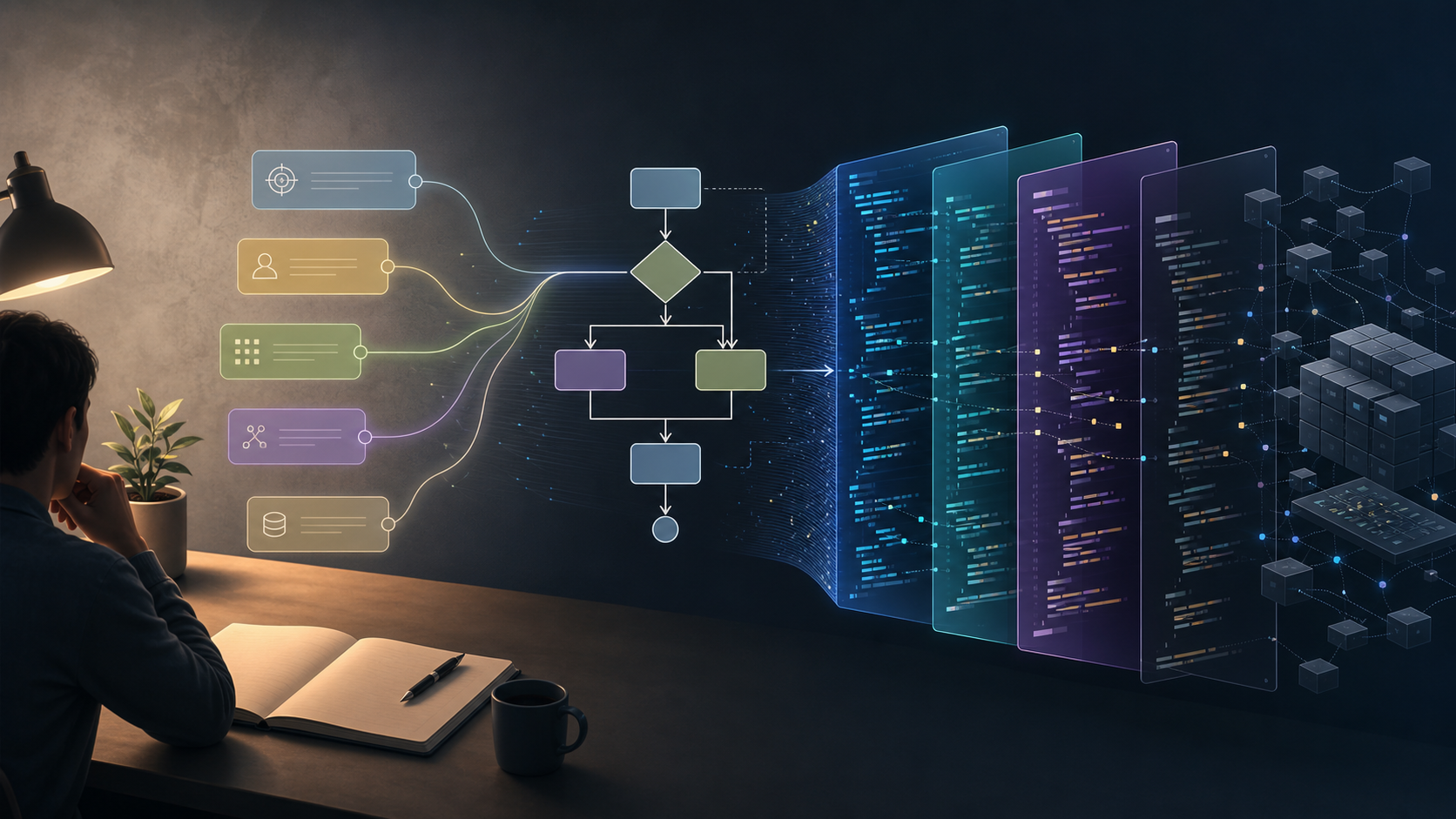
For decades, we measured programming ability by how well someone knew a language.
I no longer think that is the right measure.
In fact, I no longer believe Python is the most important programming language I know.
Pseudocode is.
That might sound odd coming from someone who writes software for a living, but hear me out.
The Centre of Gravity Has Shifted
For most of my career, becoming proficient in a language meant mastering its syntax, idioms, libraries, and countless implementation details. The better you knew the language, the more productive you became.
Today, I spend far less time thinking about Python syntax than I did even a few years ago. Not because Python has become less useful. Quite the opposite. It is because I am almost always working alongside AI tools such as Codex or Claude.
Programming has not changed.
Where the value lies has.
From Writing Code to Specifying Intent
When I design a new feature, my thought process rarely begins with code.
It begins with intent.
Receive webhook
Validate signature
Deserialize payload
Store the event
Queue background processing
Retry failures
Return immediately
There is not a single line of Python in that description.
Yet an AI can turn those few lines into a well-structured implementation in Python, Go, Rust, Java, or several other languages.
The programming language has become the output.
The design has become the input.
Engineering Was Never About Syntax
The difficult part was never remembering whether Python uses elif, or whether Go requires explicit error handling.
The difficult part is deciding what the system should do.
Should the webhook return immediately?
Should processing happen asynchronously?
What happens if the queue is unavailable?
How should retries work?
Where should logging occur?
How do we prevent duplicate processing?
These are engineering decisions.
Syntax was always the easy part. AI has simply made that more obvious.
A New Hierarchy of Skills
I think software engineering skills are naturally separating into five layers:
- Syntax
- Language idioms
- Algorithms and data structures
- Systems architecture
- Problem decomposition
AI is steadily reducing the value of memorizing syntax.
It is not reducing the value of architecture, judgment, or the ability to decompose an ambiguous business problem into a coherent technical design.
If anything, those skills have become even more valuable.
Pseudocode Is Becoming a Design Language
I do not believe pseudocode is replacing Python.
Python is not going anywhere.
Rather, pseudocode is becoming the language we think in.
User uploads document
Validate
Extract metadata
Hash contents
Chunk document
Generate embeddings
Store vectors
Update search index
Notify user
Write audit log
That is not executable software.
It is executable intent.
An AI can expand those steps into thousands of lines of production-ready code.
The important work was deciding what should happen.
Reviewing Is Replacing Typing
Programming is becoming less about typing and more about reviewing.
Can I spot inefficient code?
Does this introduce a race condition?
Will this scale?
Is it secure?
Does this implementation actually satisfy the requirements?
AI can generate code in seconds.
It still depends on someone to determine whether that code is correct.
Languages Still Matter
None of this makes programming languages irrelevant.
You still need enough knowledge to recognize good code from bad code.
You should understand asynchronous programming, memory usage, package structure, and why certain patterns exist.
The difference is that you no longer need to memorize everything.
You need to understand what you are reviewing.
The Future Belongs to Systems Thinkers
Software engineering is not becoming less valuable.
It is moving higher up the abstraction stack.
The engineers who thrive will not necessarily be the ones who type the fastest or remember every language feature.
They will be the ones who can define problems clearly, decompose complex systems, understand trade-offs, and guide AI toward robust implementations.
In other words, they will think like architects.
We used to measure engineers by the code they produced.
Increasingly, we will measure them by the quality of the intent they can specify.
The programming language of the AI era is not Python or Rust.
It is clear thinking.