
When AI Writes the Code, Wisdom Writes the Rules
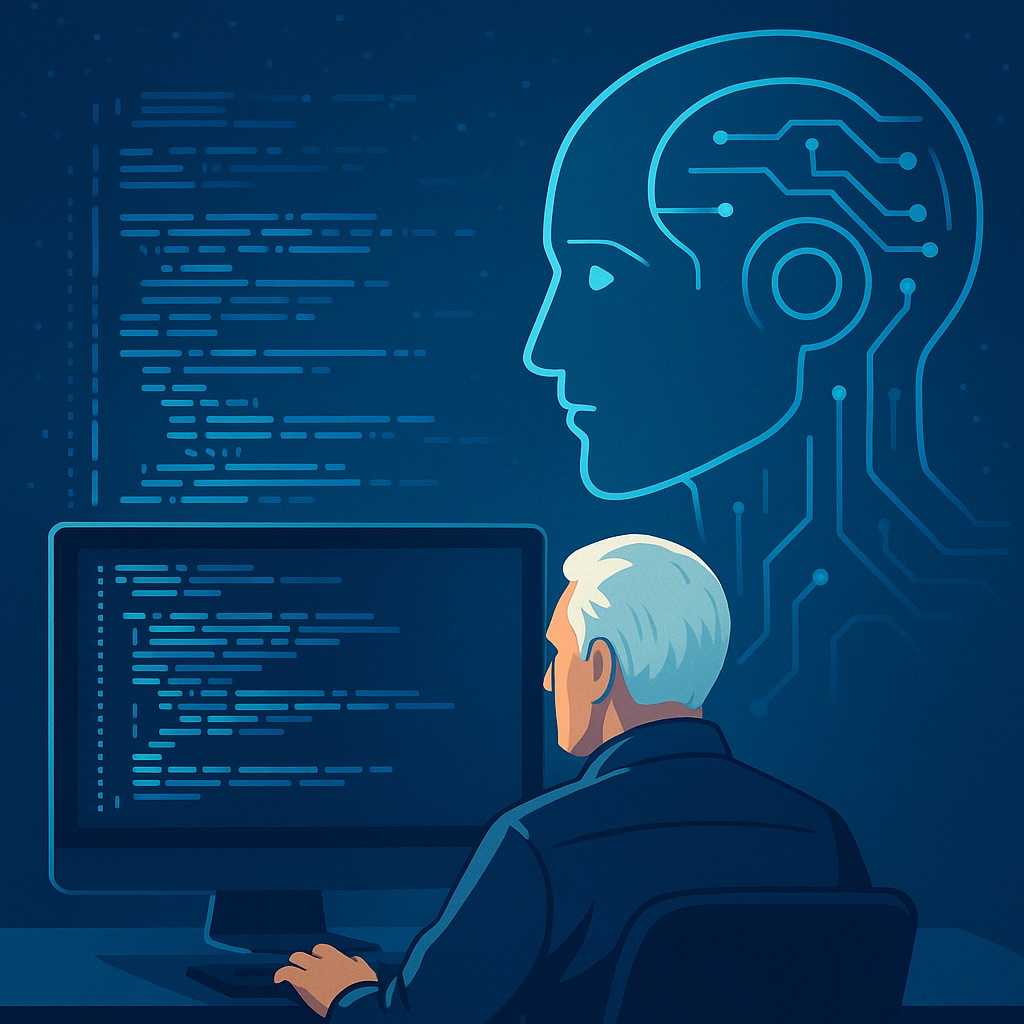
It used to be that the measure of a software developer was how fast they could code. How cleanly. How cleverly. But in a world where AI can now write, refactor, test, and deploy code faster than most juniors can Google the syntax, raw coding speed and rote memory are rapidly losing their edge. The game is changing, and with it, the value system of software development.
If you’re an experienced developer, you might’ve felt the ground shifting. But here’s the kicker: you’re not being replaced. You’re being revalued. Repositioned. Not as a typist of functions and loops, but as an orchestrator of systems, a judge of trade-offs, and a guide for AI copilots who, frankly, don’t understand consequences.
The Rise of the Fast and the Thoughtless
Generative AI tools like GitHub Copilot and ChatGPT can now crank out decent code in seconds. This is both incredible and deeply risky. AI doesn’t understand context. It can’t reason about long-term maintainability, security, or system design. It doesn’t understand why something matters—only that it resembles something it’s seen before. That’s a problem.
We’re entering a phase where junior developers might never fully develop judgment if they rely too heavily on AI to think for them. That’s a dangerous trend. The tools are powerful, but without senior oversight, they become fast paths to tech debt, subtle bugs, or worse—false confidence.
The Return of the Elder Technologist
Ironically, the more we automate code generation, the more we need senior minds who understand what good systems look like, and more importantly, what bad ones smell like. Code is no longer the product. It’s a byproduct of thinking. And thinking well is in short supply.
Experience matters now more than ever—not because seniors can write more lines of code, but because they know which lines shouldn’t be written at all. They’ve lived through architecture disasters. They’ve debugged race conditions at 3 a.m. They’ve seen what happens when you prioritize delivery over design. They’ve felt the pain.
These are not things you can “prompt engineer” your way out of. This is intuition forged through fire. And this is the exact kind of leadership AI cannot provide.
The New Developer Stack
The senior dev of tomorrow looks a lot like a fractional CTO today. Their stack includes:
- Strategic judgment
- Pattern recognition
- AI prompt literacy
- Systems thinking
- Business acumen
- Mentorship ability
They are part technologist, part philosopher, and part coach. They don’t just ship code—they shape ecosystems.
The juniors? They’re not out of the picture. In fact, they’re about to get a superpower. With AI at their fingertips, their potential productivity skyrockets. But without the influence of wise developers, they risk becoming operators of black boxes rather than creators of coherent systems.
What This Means for the Industry
This isn’t the end of software development. It’s the start of its next evolution. AI will eat the low-hanging fruit—the CRUD apps, the boilerplate, the scaffolding. That’s a win. But it leaves a gaping hole where judgment used to be, and the industry is waking up to that fact.
Companies that prioritize speed over wisdom are going to pay the price. They’ll ship fast and break things—sometimes things that can’t be unbroken. And as regulatory, ethical, and security concerns grow, the margin for error shrinks. That’s when the value of experience becomes undeniable.
We’ll see a renewed respect for senior talent. Not just coders, but code stewards. People who can teach, temper, and elevate the entire engineering practice. The ones who know when not to build. When to push back. When to say no.
AI Is a Mirror—It Needs a Mind Behind It
Here’s the twist: AI isn’t the enemy. It’s a mirror. It reflects what we ask of it. Garbage in, garbage out. But the inverse is also true: clarity in, excellence out.
That’s where experienced developers shine. They know how to ask the right questions. They don’t just prompt—they interrogate. They know the weight of a bad assumption and the cost of a rushed decision. When they guide AI, the results aren’t just faster—they’re smarter.
So no, this isn’t the end of the road for human coders. But it is the end of the road for undisciplined ones. The industry is maturing, and with that comes a premium on wisdom.
Closing Thought
The future belongs to those who can think, not just type. And in a world of infinite output, discernment becomes your sharpest edge. The question isn’t whether AI will change the way we develop software—it already has. The question is whether you’re ready to lead in this new era.
Because when the machines can write code, it’s the humans who can write sense into it that become indispensable.
#StayFrosty!