
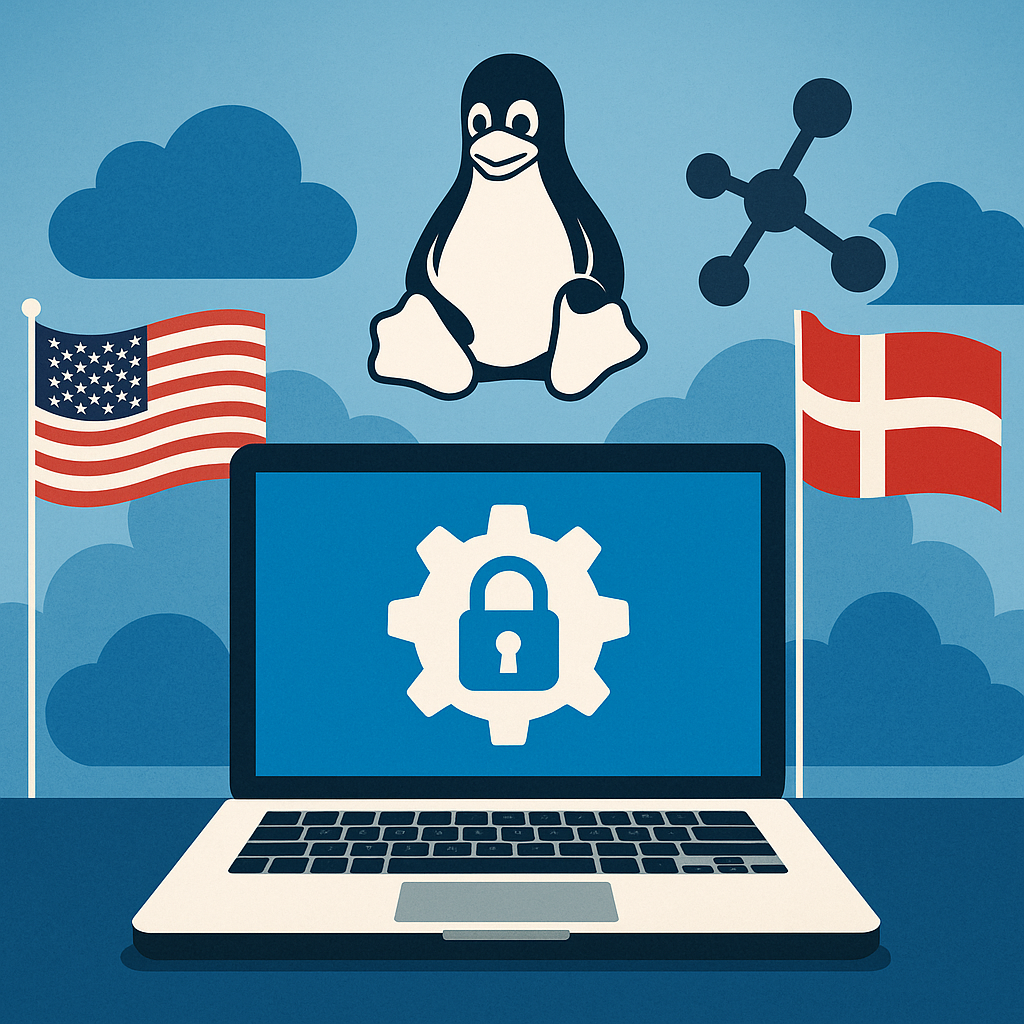
In a world increasingly defined by digital dependence, control over your tech stack is no longer a luxury—it's a necessity. Governments are waking up to the risks of vendor lock-in, and businesses of all sizes should take note. This article explores the growing importance of digital sovereignty, why open source and shared standards are more than just buzzwords, and how your business can futureproof itself—before the lights go out.
Imagine waking up one day and discovering that the tools you use to run your business—your email, your documents, your client records, your analytics—are no longer accessible. Not because of a technical glitch, but because a foreign government or corporate giant has decided to flip a switch. Far-fetched? Maybe. But increasingly, it’s not fiction—it’s a warning shot.
We’ve seen supply chains disrupted, data sovereignty challenged, and national security concerns rise—not just from rogue actors, but from dependency on a handful of tech titans. Which begs the question: in a world so deeply digital, who really owns your infrastructure?
Welcome to the growing movement for digital sovereignty, where control, resilience, and open standards aren’t just technical ideals—they’re strategic imperatives.
The Hidden Cost of Convenience
Let’s be honest—Microsoft, Google, Amazon, and others have created astonishingly useful platforms. They work. They’re convenient. They’re integrated. But here’s the rub: that convenience comes with a price—and it’s not always measured in dollars.
It’s measured in lock-in.
The more you depend on proprietary document formats, communication tools, authentication layers, and cloud APIs, the more control you cede. That’s fine—until it’s not. Whether it’s a sudden EULA change, regulatory shift, or a geopolitical standoff, your business can become collateral damage in someone else’s game.
That’s not just hypothetical. Denmark just announced plans to dump Windows and Office 365 in favour of Linux and LibreOffice. Their motivation? Not cost. Not innovation. Control.
And they’re not alone.
Why Sovereignty Matters (Even to Small Teams)
Now before you roll your eyes and say “Yeah, but that’s government stuff,” consider this:
- APIs are the new glue. Your systems talk to your payment processors, your analytics dashboards, your shipping providers, your clients’ platforms. What happens when the glue is proprietary, undocumented, or revoked?
- Formats are the currency of collaboration. If a vendor controls the document format, they control the terms of participation. Can your contracts, invoices, or media assets still function when you migrate?
- Cloud is someone else’s computer. And their politics, their compliance standards, and their agenda may not align with yours tomorrow.
Even solopreneurs are at risk. The digital world doesn’t care how big you are—it cares how portable your systems are.
The Open Source Advantage
Open source isn’t just about “free software.” It’s about freedom of choice. It’s about verifiability, auditability, and the ability to adapt without begging permission.
It also fosters resilience.
In a world where everything is interconnected, open standards and open code are the bedrock of stability. When you use tools like:
- LibreOffice (ODF) instead of .docx
- PostgreSQL instead of a black-box database
- OAuth/OpenID instead of a vendor-specific auth layer
- REST/GraphQL APIs with public schemas
- Open Container Initiative (OCI) formats for your cloud builds
…you’re playing on a field where rules are clear and no one player owns the whistle.
Better yet, if a vendor fails, disappears, or pivots? You still have options.
Standards: The Unsexy Superpower
There’s a temptation to think that “innovation” is all about moving fast and breaking things. But if the last 20 years have taught us anything, it’s that moving fast without shared formats and standards just leads to chaos.
Think of standards like road signs. Imagine if every city had different colours for stop signs or drove on a different side. That’s what it’s like trying to build software systems without shared formats.
Want to futureproof your stack?
- Agree on your document and object formats.
Use open formats like JSON, YAML, ODF, and AVIF. Avoid vendor-specific formats unless absolutely necessary. - Use standard API patterns.
REST, GraphQL, gRPC are fine—but stick to well-documented schemas. Enforce API versioning. Publish your specs. - Keep identity portable.
Use auth systems that support federated identity and SSO. Locking users into a single vendor’s auth system is a handcuff you’ll regret. - Don’t fall for “integration theatre.”
Many vendors claim openness while quietly pushing lock-in. Test the exportability of your data and the portability of your workflows.
Open ≠ Free-For-All
Let’s address the elephant in the room. Open source isn’t always easier. You don’t get the same out-of-the-box polish, or 24/7 support SLA from a trillion-dollar vendor. You’ll have to think a little more. But you also won’t get rug-pulled when licensing changes or support is dropped.
Think of it like cooking at home. It’s not as quick as ordering Uber Eats, but you know exactly what went into it—and you can tweak it however you like. You’re in control.
In fact, we need to reframe “DIY” in tech. It’s not about being a hermit with a command line. It’s about assembling your own toolchain from components that can’t be taken away from you.
Control isn’t about saying no to SaaS. It’s about making sure you can say no when it matters.
The Geopolitical Undercurrent
We live in a time of increasing tension—between nations, between governments and big tech, between privacy and profit.
- The US CLOUD Act can compel companies to hand over data—even if it’s hosted outside the US.
- China’s tech policies are raising global concerns about surveillance and access.
- The EU is pushing hard for data residency, digital sovereignty, and control over critical infrastructure.
And yet most of the world’s businesses still rely on a handful of providers for their email, documents, authentication, and analytics.
That’s like running your government on foreign electricity. Sooner or later, someone’s going to cut the power.
What You Can Do Today
Digital sovereignty isn’t just a policy issue. It’s a business issue. And like any good risk strategy, it starts with awareness and small steps:
- Audit your dependencies.
List the top 10 tools your business relies on. Can you export your data? Can you run a backup copy locally? Can you swap vendors without massive pain? - Shift one critical tool to an open alternative.
It might be your office suite. Or your CMS. Or your chat system. Start small. - Push vendors to support open standards.
Ask if they offer API access. Request documentation. Reward transparency. - Join or support open source efforts.
Even if you’re not a coder, your support (financial or visibility) helps keep alternatives viable. - Educate your team.
This isn’t just a technical issue—it’s about control, continuity, and competitiveness.
This Isn’t Paranoia. It’s Preparedness.
I’m not saying abandon every commercial tool you use. But I am saying: know where the exits are.
The goal isn’t to be a digital isolationist. The goal is to be resilient—able to stand up, move, or adapt without begging for access.
The real question isn’t “what’s cheapest?” or “what’s trendiest?”
It’s: Who controls the keys to your business future?
If the answer isn’t you… then it’s time for a change.
#StayFrosty! Oh, and Stay sovereign 😎
— J
Q&A Summary:
Q: What is digital sovereignty?
A: Digital sovereignty refers to having control over your tech stack, resilience, and open standards. It's about having the ability to adapt without asking for permission and ensuring that your systems are portable.
Q: Why is digital sovereignty important?
A: Digital sovereignty is important because it prevents businesses from becoming collateral damage in situations such as a sudden EULA change, regulatory shift, or a geopolitical standoff. It also allows for control over infrastructure, the ability to adapt without asking for permission, and resilience in a world where everything is interconnected.
Q: What does 'lock-in' mean in the context of digital sovereignty?
A: Lock-in, in this context, refers to the dependence on proprietary formats, tools, and systems that can lead to loss of control. This can become a problem in situations where there's a sudden EULA change, regulatory shift, or a geopolitical standoff.
Q: What is the advantage of open source in digital sovereignty?
A: Open source provides freedom of choice and the ability to adapt without asking for permission. It allows for verifiability and auditability. Furthermore, it fosters resilience and stability in an interconnected world by using open standards and code.
Q: How can a business futureproof its tech stack?
A: A business can futureproof its tech stack by agreeing on document and object formats, using open formats, sticking to well-documented API patterns, keeping identity portable, and avoiding vendors that push lock-in. It's also crucial to test the exportability of data and the portability of workflows.
